Let’s Play Would You Rather?
Round 1: Would you rather own the tanker, or charter it?
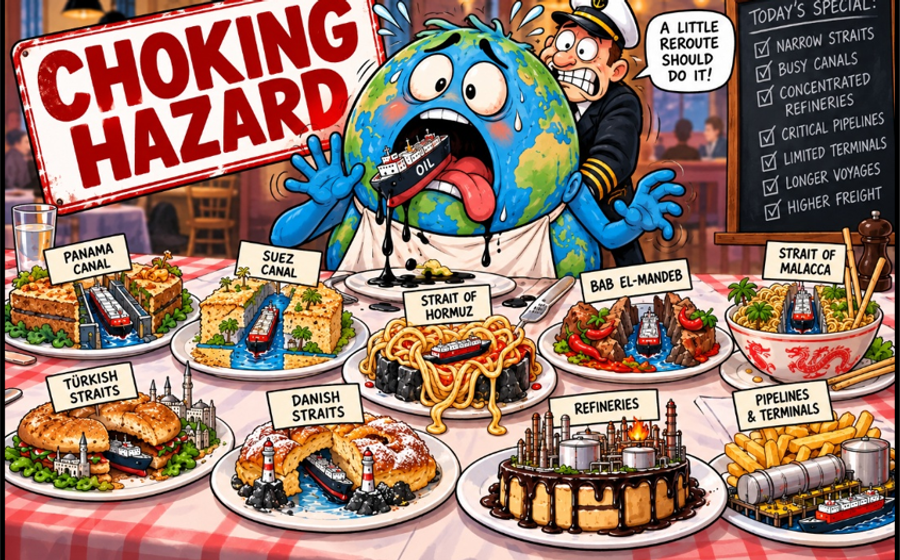
Right now, you’d probably choose ownership. With geopolitics rearranging trade flows, uncertainty surrounding the Strait of Hormuz and other chokepoints, and tanker markets responding accordingly, owning the scarce physical asset looks like a pretty enviable position. When cargoes need to move and everyone wants the same handful of ships, the Owner has something the Charterer can’t manufacture: another tanker.
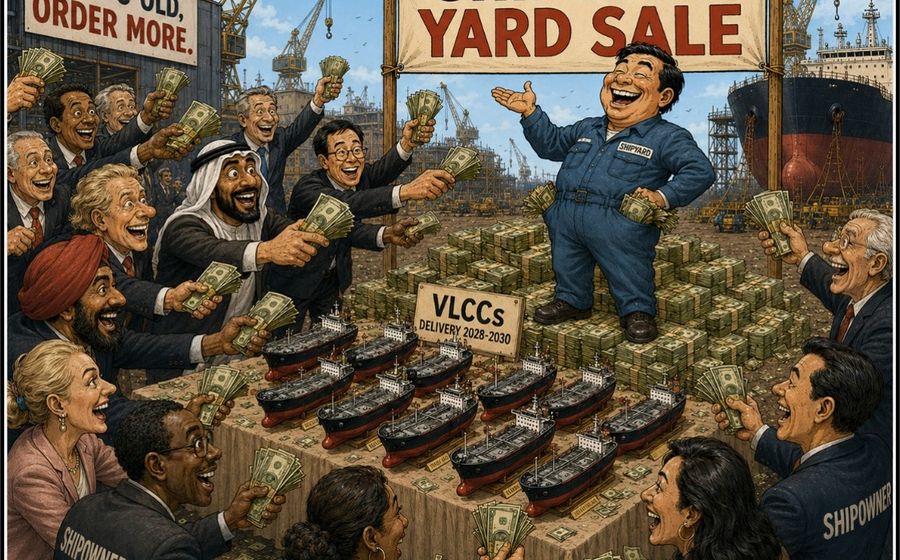
There are only so many ships, only so many in the right place and only so many available at precisely the moment everyone decides they need one. In that market, an Owner doesn’t need an especially elaborate commercial strategy. He needs a telephone, preferably one that won’t stop ringing. After years of financing the ship, crewing it, maintaining it, insuring it and complying with an ever-growing list of regulations, suddenly everyone wants the enormously expensive piece of steel you’ve spent all that money keeping afloat. Scarcity is a wonderful business when you own what’s scarce.
Owner wins Round 1. But Would You Rather is never that easy.
Round 2: Would you rather own the scarce asset, or have the ability to be nimble and change what you need?
Now it gets interesting. The Charterer on the other end of that ringing telephone isn’t necessarily sitting there helplessly watching the Owner count the money. In fact, some of the companies paying these freight rates are making an awful lot of money themselves.
ExxonMobil’s Q2 earnings this year were $14.5 billion (over double what they were last year). Trafigura reported a net profit of $4.1 billion for the first half of their 2026 fiscal year, nearly tripling from $1.5 billion reported over the same period in 2025. These aren’t exactly businesses being crushed under the weight of an expensive freight bill.
And that’s the point. For an oil major, refiner or commodity trader, freight is one number in a much larger commercial equation. They can hedge freight, bunkers and crude. They can trade crude differentials, change supply sources, draw inventories, redirect cargoes, adjust refinery runs or decide that a trade that made perfect sense yesterday doesn’t work today.
Sometimes the best trade is the one you don’t do. The Owner wakes up owning the ship every morning. The Charterer doesn’t necessarily wake up needing that particular ship, for that particular cargo, on that particular route.
Point to the Charterer? Not so fast.
Round 3: Would you rather have the hedge, or own what everyone’s hedging?
Optionality is valuable, but it isn’t magic. A Charterer can hedge freight on paper, but paper ships have one rather significant design flaw: they can’t carry oil. If two million barrels actually have to get from A to B, someone eventually needs a tanker. A real one. And when real tankers are scarce, the Owner gets to remind everyone why physical assets matter. Point to the Owner.
Except expensive freight doesn’t exist in a vacuum. It changes everything around it. Make one source of crude too expensive to move and another becomes more attractive. Stretch voyages and ton-mile demand changes. Delay or divert enough vessels and the effective fleet tightens without a single ship disappearing from the water. Move freight far enough to close one arbitrage and you may have just opened another somewhere else. Which brings us to the next round.
Round 4: Would you rather monetize the dislocation, or monetize everything the dislocation changes?
The Owner can monetize scarcity directly. The Charterer can potentially trade the consequences. Crude differentials shift. Refinery economics change. Origins, destinations and timing move. New opportunities appear where old ones disappear.
The freight rate making an Owner’s day doesn’t necessarily have to ruin the Charterer’s. Sometimes both sides can make money from the same chaos, just in completely different ways. Same Strait. Same ships. Same barrels. Completely different chessboards. So, Charterer? Maybe. But…
Round 5: Would you rather have operating leverage, or optionality?
When freight rises, operating leverage can be a beautiful thing. The ship is already there. Many of its costs are already accounted for. Then the market moves, revenue increases, and margins suddenly become much more interesting. There aren’t many businesses where geopolitical turmoil thousands of miles away can make an existing asset dramatically more valuable almost overnight.
Of course, operating leverage has never promised to work in only one direction. Today’s extraordinary fixture has an irritating habit of becoming tomorrow’s historical data point. The market can change. The earnings can change. The ship remains very much yours. Steel doesn’t hedge itself. But optionality has its own price. Hedging isn’t fortune telling. Flexibility isn’t immunity. Sometimes the cargo simply has to move, no matter what the freight screen says. At that point, all those choices lead back to the same place: someone needs a ship.
So, who’s winning? It’s not all that clear. Every round forces us to pick a winner when the market itself doesn’t. Every time the Owner looks like the obvious choice, the Charterer has another lever to pull. Every time the Charterer looks like the clever choice, the physical market reminds everyone that barrels don’t move themselves.
And maybe that’s the more interesting way to look at the tanker market right now. Owners and Charterers aren’t simply sitting on opposite sides of a freight negotiation. They’re bringing different risk profiles, appetites and objectives to the same market. One has the asset everyone suddenly wants. The other may have the ability to change what, where, when and how much it wants. Neither needs the other to lose in order to win. In the right market, when the pieces align, both can do very well indeed.
Final round: Would you rather be an Owner or a Charterer?
I’m not answering that one. Not because there isn’t an argument to be made for either side, but because the answer probably says more about how you see this market than it does about which side has the better business. Would you rather own the tanker everyone needs today, knowing you’ll still own it when the market turns? Or would you rather need the tanker today, knowing you may have a dozen other ways to trade what happens tomorrow?
Choose carefully. That’s the trouble with this game: you don’t get to say both.